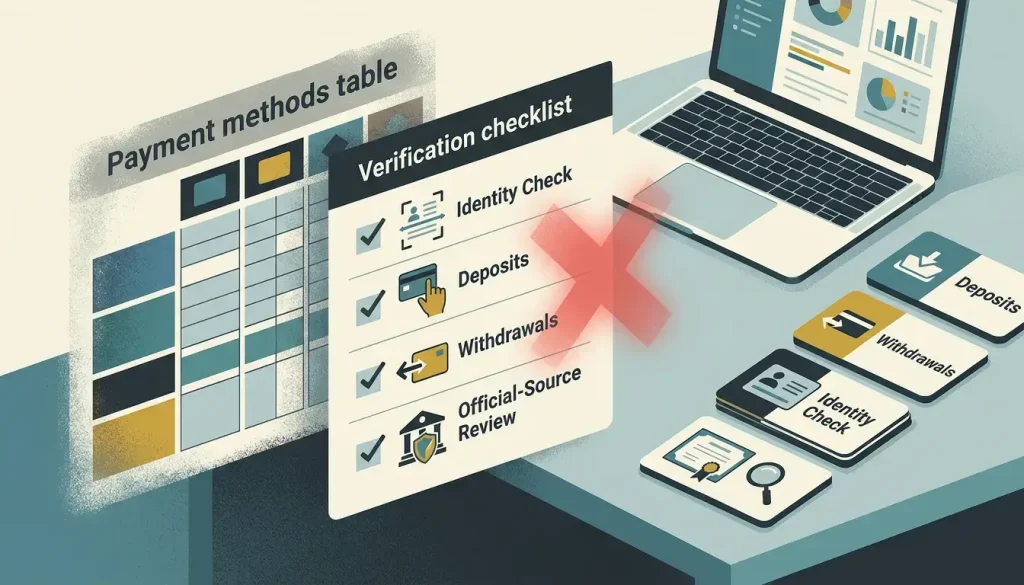
How to Check a UKGC Casino Licence Before Trusting Winner Claims
 Available in GB
The Gambling Commission public register is the first place to check a casino licence claim for Great Britain. Before depositing anywhere, match the exact domain, legal operator name, trading name, licence status and regulatory history. This is especially important with Winner-branded searches because the official Winner.com and Winner.co.uk trail points to closure evidence, while search results can still show active-style claims from older or third-party pages. This guide gives a practical register workflow. It is not a list of recommended casinos, and it is not advice on bypassing self-exclusion or gambling controls.
Why a register check comes before trust
A casino page can look official before it is official. It can show badges, use familiar brand language, display a footer, and describe bonuses or fast withdrawals. None of that proves a licence by itself. For Great Britain consumers, remote gambling operators need a Gambling Commission licence, including online and app-based gambling. That requirement also matters when a business is based abroad but serves people in England, Scotland or Wales.
The register is useful because it separates marketing wording from public regulator records. It also helps readers avoid mixing up a brand name, a domain name, and the legal business behind a gambling site. Those three details must line up before an active casino claim deserves trust.
For Winner-specific context, keep the regulatory trust guide open beside this workflow.
Step 1: capture the exact page you are checking
Start with the evidence in front of you. Copy the full domain from the address bar. Do not rely on a search result title, an advert headline, or a review page summary. Write down the visible operator name, the licence number if one is shown, the regulator named in the footer, and the country or market the page says it serves.
This matters because a domain can be a historical site, a current official site, a white-label site, an affiliate page, or a lookalike. A trading name can differ from the legal account name on a regulator record. A footer can also be stale or copied. The check is only useful when the domain, operator and register result are compared together.
Step 2: use the Gambling Commission public register
- Open the Gambling Commission public register.
- Search the gambling businesses register using the legal operator name, trading name, domain name, or account number you found.
- Open the closest matching business record rather than trusting the first similar result.
- Compare the account name with the operator named on the casino page.
- Check whether the relevant domain or trading name is present and whether the record supports the activity being claimed.
- Review the licence status and any regulatory action information shown in the public record.
If you cannot match the domain and operator trail, treat the page as unverified. A similar brand phrase is not enough. A historical record is not enough. A badge that cannot be tied back to the public register is not enough.
Common false shortcut
The most common mistake is searching only the brand name and stopping at the first familiar result. That shortcut can miss the legal operator, the domain trail, the current licence status, or a regulator action. It can also confuse a former operator record with a current player offer. A proper check starts with the page itself, then tests whether the public register supports the exact business and domain behind that page.
What to compare
| Check | Why it matters | Pause if |
|---|---|---|
| Exact domain | The public page and the register trail need to refer to the same website or a clearly connected domain. | The site uses Winner wording but the address is different or unexplained. |
| Legal operator name | The brand shown to players may differ from the company that holds a licence. | The footer name and register account name do not match or are missing. |
| Licence status | A current active licence is different from a surrendered, inactive, expired, suspended, or historical record. | The page relies on old licensing language or does not support current Great Britain play. |
| Regulatory actions | Public action records can show important trust history that a casino page may not highlight. | The active claim ignores a serious history or gives no route to verify it. |
| Terms before account action | Players should be able to assess identity, payment and bonus rules before sharing sensitive information. | The page asks for documents, payment data, or a deposit before clear licence identity is shown. |
Step 3: apply the Great Britain and Northern Ireland caveat
UK wording can be misleading if it flattens different regulatory positions. The Gambling Commission regulates gambling in Great Britain, which covers England, Scotland and Wales for this licensing discussion. Its public remit also gives a separate Northern Ireland caveat for remote gambling advertising. Because of that, a careful page should not simply say that a casino is legal, licensed, or authorised across the whole UK without explaining the distinction.
When a casino page says UK, ask a narrower question: does the record support service to Great Britain consumers on this exact domain, under this operator, for this type of gambling? If the page is targeting Northern Ireland, the wording needs additional care and should not be treated as automatically answered by a Great Britain-focused check.
Step 4: do not treat self-exclusion as a loophole topic
GAMSTOP is the national online self-exclusion scheme for gambling companies licensed in Great Britain. It blocks registered users from signing up for or using online accounts with those licensed companies, and exclusion periods can run from six months to five years with an auto-renewal option. Self-exclusion should be treated as a protection tool, not as a clue for finding alternative gambling access.
If a page advertises itself as outside normal controls, or suggests that self-excluded users can use it, treat that as a safety warning. This guide does not explain how to bypass GAMSTOP, and it does not recommend casinos on that basis. A legitimate licence check should support safer gambling, not weaken it.
Step 5: check age and identity expectations
Licensed online gambling businesses must ask customers to prove age and identity before they gamble. Public guidance also says a business should not use age or identity verification as a withdrawal condition if it could have asked earlier, although legal obligations may still require information at the relevant time. In practice, that means identity checks are a normal part of licensed gambling, but the timing and explanation should be fair.
Do not turn this into a claim about Winner’s current account process. No current official Winner account journey is verified here. Instead, use it as a general warning: if any live-looking page asks for documents or money before its domain and licence identity are clear, pause before continuing.
How this applies to Winner Casino searches
The Winner case is a good example of why the workflow matters. The live Winner.com landing carries closure messaging at the time of writing, and the UK-facing Winner.co.uk address resolves to the same kind of closure page. The Gambling Commission also has historical context for the former winner.co.uk operator through PT Entertainment Services. Those facts are useful, but they do not create a current live casino path. They also do not prove that a similarly named page is official.
Use the register check as a filter. If a page claims active Winner Casino access, ask whether it matches the official domain trail, whether the legal operator is clear, whether the public register supports the claim, and whether the page is consistent with the current closure evidence. If any answer is missing, treat the active claim as unverified.
For the former-operator details, read the PTES investigation context. For domain confusion, use the domain and lookalike checks page.
Fast decision checklist
- Can you identify the exact domain and confirm it is the page you meant to check?
- Does the page name a legal operator, not only a brand?
- Does the Gambling Commission register show a matching business, trading name or domain trail?
- Is the licence status current and relevant to Great Britain remote gambling?
- Are any regulatory actions or historical records consistent with the trust claim being made?
- Are age, identity, bonus, payment and account terms visible before sensitive information is requested?
- Does the claim avoid self-exclusion bypass language?
Bottom line
A safe UKGC licence check is not a quick badge scan. It is a matching exercise: domain, operator, trading name, licence status, regulatory history and current page behaviour all need to fit. With Winner-branded claims, that check is especially important because official closure evidence and historical PTES records can be confused with current active casino claims. When the evidence does not line up, do not deposit, upload documents, claim bonuses, or treat the page as verified.
After checking the register workflow, return to the Winner Casino UK hub or continue to the bonus claim checks page.
This material was created by the Winner Casino UK Guide team.
Related posts
Is Winner Casino Still Open in the UK?

PT Entertainment Services, Winner.co.uk and the UKGC Investigation