Winner Casino UK Licence, Regulation and Trust Status
 Available in GB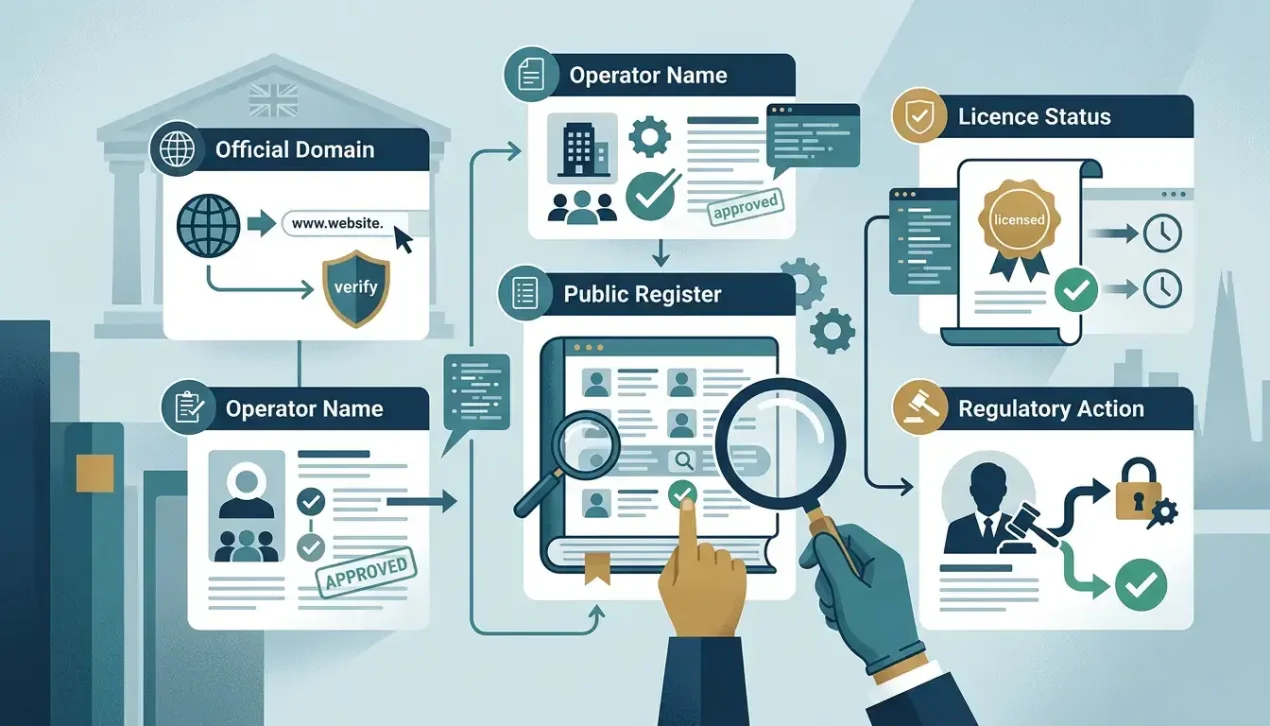
The verifiable Winner Casino UK licence story is historical, not current. Gambling Commission material identifies PT Entertainment Services as the former operator that traded as winner.co.uk and titanbet.co.uk, records a licence surrender during an investigation, and reports serious social-responsibility and anti-money-laundering failings at that operator. No active Gambling Commission licence was verified for the locked Winner.com or Winner.co.uk brand during research. Great Britain operators serving English, Scottish or Welsh consumers need a UKGC licence, and Northern Ireland sits under separate wording.
Licence position in plain English
Winner Casino cannot be reviewed like a current UK casino with a visible live licence badge and a working account journey. The available verified record points to past UK-facing activity and current closure evidence. Gambling Commission material identifies PT Entertainment Services as the former operator that traded as winner.co.uk and titanbet.co.uk. The same regulator material states that PT Entertainment Services surrendered its licence during an investigation and that the business ceased trading.
The practical reading is narrow. The historical UK record explains why winner.co.uk appears in regulator material and why “Winner” remains a recognisable name in UK search results. It does not, on its own, establish that Winner.com or Winner.co.uk now holds a Great Britain operating licence, runs a current UK-facing cashier, or operates a present-day promotional flow. Any newer page claiming any of those things needs its own checks against the Gambling Commission public register and against the current state of the official domains.
For the current open-or-closed evidence behind those domains, start with the official status before licence claims page. This page handles the licence and regulation side of the trust picture.
What has been verified and what has not
| Topic | Verified position | Reader takeaway |
|---|---|---|
| Former UK-facing operator | The Gambling Commission identifies PT Entertainment Services as having traded as winner.co.uk and titanbet.co.uk. | Treat this as historical operator context, not a live sign-up route. |
| UKGC licence status in the historical record | Regulator material says PT Entertainment Services surrendered its licence during the investigation and ceased trading. | Do not convert surrendered historical status into a current approval claim. |
| Current UKGC licence for Winner.com or Winner.co.uk | This research did not verify an active current Gambling Commission licence for the locked official operation. | Any active-looking claim needs a fresh register check. |
| Malta licence context | The MGA authorisation page for Universe Entertainment Services Malta Limited lists licence MGA/B2C/249/2013 with surrendered status. | Do not treat old Malta context as current UK permission. |
| Great Britain framework | UKGC guidance says remote gambling services for Great Britain consumers require a Gambling Commission licence, including online and app-based gambling. | Use the public register, not a brand name, as the test for current Great Britain authorisation. |
Former operator, current domain, and regulator record are different things
A common trust mistake is to collapse several separate layers into one simple label. Winner.co.uk is a domain. PT Entertainment Services is the historical operator named by the Gambling Commission. Winner.com is a related official brand domain referenced in this guide. A regulator record can discuss a former operator even when the related public website is now a closure page.
Those distinctions matter because each layer answers a different question. A domain check asks whether the page in front of you is the official one you intended to visit. An operator check asks which legal business is named behind a service. A register check asks whether the regulator record supports the licence status the page is claiming. A closure check asks whether the official page is offering a live player journey at all. None of these checks should be skipped because a page title includes familiar brand wording.
This is also why the lookalike-domain guide belongs beside the licence pages. A similarly named page can create misplaced confidence before the operator and register trail has been tested.
Great Britain and Northern Ireland caveat
UK wording needs care in any licence discussion. The Gambling Commission regulates gambling in Great Britain, which means England, Scotland, and Wales for licensing purposes. Northern Ireland sits under a separate framework, and remote-gambling provision and advertising there carry their own caveats under the Gambling Act 2005 as amended by the Gambling (Licensing and Advertising) Act 2014. For that reason, blanket statements about Winner being authorised “in the UK” smooth over a distinction that matters in practice.
For Great Britain consumers, official guidance says a licence is needed to provide facilities for remote gambling, including internet and mobile gambling. That requirement applies even when the operator is based abroad if the website or app can be played by people in England, Scotland, or Wales. This is general regulatory context. It is not personal legal advice and it does not assert that Winner currently holds any such licence.
What the PTES investigation adds to trust assessment
The PT Entertainment Services record is not just a footnote in the Winner story. Gambling Commission material reports serious social-responsibility and anti-money-laundering failings at the former winner.co.uk operator. It also states that the licence was surrendered during the investigation and that PT Entertainment Services ceased trading. Those facts inform any responsible trust read of the brand, because they sit on the regulator’s own record rather than on commentary about the brand.
At the same time, the PTES history does not transfer automatically to every page that uses the Winner name. It applies to the legal entity and trading-name combination that the Commission identifies. A separately operated lookalike domain, a present-day claim attached to an unrelated business, or a future operator using a similar brand would each carry its own facts and would need their own checks. The deeper PT Entertainment Services details page reserves the full historical timeline; this section uses the same evidence as background for current licence wording.
How to check a licence claim
- Start with the exact domain and the visible operator name on the page being checked.
- Record the licence number, regulator name, and any domain or trading-name statement shown in the footer.
- Use the Gambling Commission public register to search by business name, trading name, domain name, or account number.
- Compare the licence status, activity, domain status, and regulatory-action fields with the claim shown on the site.
- If the status is surrendered, inactive, unclear, or not matched to the domain, do not treat the page as verified for Great Britain play.
- Check the official Winner closure pages before trusting any current promotion, app, game, or payment statement.
The full licence verification steps page walks through the register method in more detail.
What public-register status fields actually mean
The public register uses several status labels, and the differences matter. An active status indicates a current operating licence. A surrendered status means the business has given up the licence because it no longer wishes to operate under it. A revoked status records regulator action against the licence. Suspended, lapsed, expired and inactive labels each carry their own meaning, and a current operating permission cannot be inferred from any of the non-active states. A surrendered entry, in particular, is a very different trust signal from a live licence.
Domain status sits alongside the licence status on the register, and the two are not interchangeable. The business register notes that domain names and trading names are supplied by the gambling business, so a domain entry should be treated as part of an evidence trail rather than as a stand-alone seal of approval. For Winner-branded checks specifically, the test is whether the exact domain in the address bar lines up with an active operating licence held by a clearly identified operator. If the domain, operator and active licence do not all match, the active claim has not been verified, regardless of how confident the page appears.
This is especially relevant for a closed or historically complicated brand. The question is not only whether a regulator once held a record for a related operator. The question is whether the page in front of you is tied to a current, active licence covering the activity and location it offers.
Limits of historical UK records when evaluating Winner today
Historical licence records carry useful information, but their reach is limited. A former UKGC entry does not prove that the brand currently accepts Great Britain players. A surrendered Malta authorisation does not establish present UK permission. A third-party review describing past licensing does not update the regulator’s own register. A regulator article focused on a former operator does not legitimise a separately operated lookalike domain that happens to share part of the name.
The same caution applies to product detail. A historical bonus list, an old payment table, or an archived game library does not become current evidence by reuse. Promotion claims should be checked against the bonus claims and regulation page, and product claims belong on the games and mobile verification page because an old library or app reference can outlive the live service it once described.
Trust status in one sentence
Winner has verifiable historical UK-facing regulator records and current closure evidence, but this research did not verify a current active Gambling Commission licence or a live official UK player journey for the locked domains.
When stronger proof is needed
Different Winner-related claims sit at different evidence levels. A historical statement that PT Entertainment Services traded as winner.co.uk can rest on regulator material alone. A current statement that a player can open an account, deposit, withdraw, claim a bonus, or use a mobile app needs a current official source and a regulator trail that matches the page making the claim. The two standards should not be mixed.
For former players, the same gap applies. A closure notice and a regulator article do not establish a guaranteed route to account recovery, a payment outcome, or a dispute result. They explain where the public evidence points; they cannot promise a personal-case outcome. Treat personal account or money questions as case-specific, and avoid pages that request sensitive details before the operator behind the page has been clearly identified.
Limits of public licence evidence as consumer information
Public licence records are useful, but they answer a specific question: is a business listed on the regulator’s register with a particular status, for a particular activity, in a particular location? They do not answer every personal account, dispute, document or payment question, and they do not update themselves from third-party reviews. For Winner specifically, the register answers whether the locked official brand currently appears with an active operating licence, and the available evidence is that no such current entry was verified for Winner.com or Winner.co.uk during research.
This material is consumer information, not personal legal advice. The conservative reading is to keep historical operator facts separate from current actions like opening an account or trusting a cashier. Historical operator facts explain why Winner appears in UK regulatory sources. A current action would need its own live official proof, which this research did not find.
If those proofs remain absent, the safer wording stays limited: historical UK regulator records for the former winner.co.uk operator exist, current closure notices on Winner.com and Winner.co.uk exist, and current active UKGC licence evidence for the locked brand was not verified.
Decision guidance for UK readers
If the question is whether Winner has a historical UK licence story, the answer is yes, through the former winner.co.uk and PT Entertainment Services record. If the question is whether that history makes a current active Winner-branded page trustworthy on its own, the answer is no without new official evidence. Each active-looking claim should be approached as a fresh verification task.
A cautious reader can apply three filters. Status: do the official Winner domains show a live player journey or closure wording? Identity: does the page name the same operator and connect to the same domain trail? Regulation: does the public register support the claimed licence, domain and activity? A claim that fails one of these filters should not be used as the basis for registration, payments, bonuses, or personal-document uploads.
For the full site-wide summary, return to the main hub.
This material was created by the Winner Casino UK Guide team.
Verify the licensing status of past or active operators on the main website.
Ensure you are playing only on safe platforms by learning how to check the UKGC public register.
Related posts
Is Winner Casino Still Open in the UK?

PT Entertainment Services, Winner.co.uk and the UKGC Investigation